Keeping Wall Surface and Secure Fencing Integration: Melbourne Solutions
A retaining wall and a fencing could sound like two separate work, but on a Melbourne website they generally live and breathe with each other. The wall holds dirt, the fencing holds individuals and building borders, and the space between them typically determines whether the entire system looks crisp for several years or turns into a slow-moving ceremony of motion, totter, and patchwork repairs.
I have actually seen it play out enough times to be careful of "we'll simply do the fencing after." Occasionally that approach is great. Other times it silently secures issues like inadequate drain behind the wall surface, the wrong correctings at the wrong elevation, or a fence base that never ever rather rests square due to the fact that the wall is still working out. Obtaining the integration right is much less about elegant items and even more regarding sequencing, outlining, and recognizing exactly how Melbourne weather condition and dirt behave.
Why the sign up with in between wall surface and fencing matters
A keeping wall is not just an attractive edge. It's a structured system. Behind it, you have dirt stress, water activity, and ongoing micro changes as dampness levels change via the year. That stress doesn't stop when the wall surface face is ended up. If you later install fence blog posts and hammer, drill, or torque mendings right into or near the wall surface, you can inadvertently do 3 points:
First, you introduce tons where the wall might not be designed to lug them. Many walls are crafted for lateral soil stress, except repeated factor tons from fencing articles, particularly in wind conditions.
Second, you disrupt drainage paths. Even a "tiny" collection of openings or an improperly placed channel can alter how water exits the maintained dirt. When water has nowhere to go, it discovers the course of the very least resistance, often behind the wall face, often with joints, and occasionally by pressing out weak points.
Third, you develop an activity inequality. If the wall surface face discreetly moves while the fence messages are rigidly repaired, the fencing becomes the part that soaks up the distinction. That's when rails start to rack, panels misalign, and entrances begin dragging.
In Melbourne, where you can get unexpected storm occasions complied with by dry spells, water habits is the wildcard. A great assimilation plan respects that. It builds in proper water drainage, uses proper article kinds and fixings, and permits reasonable resistances rather than making believe whatever will continue to be static.
Melbourne conditions that influence the design
Melbourne's climate swings influence keeping walls and secure fencing in various means, but the end results overlap.
In wet durations, the crucial chauffeur is hydrostatic stress. If the wall has insufficient water drainage, or if water drainage is blocked throughout later works, stress spikes and pushes against the face. That's where you see efflorescence, protruding, dampness at joints, or a wall surface that "looks fine" for some time and afterwards reveals distress after rain.
In dry periods, dirt can diminish away from the wall surface a little. That can decrease stress momentarily, but it additionally changes the method water channels through the backfill. Then, during the following heavy rain, flow courses can be new and unforeseeable. It's one reason that a fence mounted also tightly versus a wall can wind up answering for what is actually a water drainage and backfill issue.
Wind is the various other big variable for fencings. Melbourne coastal and near-coastal areas can be especially demanding. Also inland, strong fronts prevail, and fencings act like sails. If your fence is more than just a light limit marker, wind tons on messages and rails issue. The wall surface system must not be treated as a ready-made structural accessory factor unless the engineering and describing verify it.
Common assimilation techniques, and when each works
There are a few sensible methods service providers integrate secure fencing with retaining walls. Which one is right relies on wall surface product, wall age, site accessibility, and just how much motion the system can accommodate.
1) Posts anchored to the wall face (with the best outlining)
This strategy is preferred because it's uncomplicated on paper and usually hassle-free on site. However it can be high-risk if the wall is older or if its face is not developed for point lots fixings.
For more recent wall surfaces, you can plan ahead. As an example, you can consist of ideal embed factors, or you can make use of a fence message base that restricts factor tension on the wall face. You still require to verify you are not endangering waterproofing layers or drainage cavities.
If the wall is currently constructed and you're retrofitting a fence, the procedure needs extra caution. Boring right into masonry or concrete audios simple, but it can damage sealants, reveal support, or produce pathways for water. An excellent installer will certainly check what's behind the wall surface face, evaluate for existing weep openings, and avoid exploration with drain elements.
In my experience, this method functions best when the fence is light to tool in wind direct exposure, and when the wall face is durable and condition-checked.
2) Fencing blog posts founded independently (near the wall surface, not right into it)
This is commonly the most flexible technique for older wall surfaces or where you want the fence to be structurally separate. Rather than asking the wall surface to bring fence tons, you set posts in the ground alongside the wall surface line.
The catch is area and soil conditions. If the kept soil settlement zone is close to the wall face, article grounds can wind up in less stable ground. You may need to expand article grounds deeper, readjust post spacing, or accept a small clearance that enables motion without stressing the fence frame.
If your wall surface is freshly built, independent blog posts can additionally help avoid hindering healing and any kind of very early motion. Still, you require to collaborate levels so the fencing remains straight along the line.
3) A "face-to-fence" design with a regulated gap
Sometimes the very best option is to stay clear of requiring the fencing and the wall to share activity. A controlled void between the wall surface face and the fence permits both systems to move without binding. That gap can be concealed with trim, landscaping, or a darkness line approach depending upon your aesthetic.
This method is particularly helpful when you can not guarantee how much the wall surface will certainly move. It likewise lowers the threat of water being entraped behind fencing bases.
Trade-off: you give up the appearance of a limited, smooth integration. Some people love that modern-day, deliberate separation, while others desire every little thing flush. If you're listening, it's the difference between "made" and "unintentionally misaligned."
Sequencing: develop the wall surface, then established the fencing at the ideal time
The largest useful mistake I've seen is installing the fence as a second thought. A keeping wall needs time for first settlement and for drainage efficiency to stabilize. You additionally want the wall surface to be completely finished, specifically around weep openings, joints, and any type of waterproofing membranes.
If you set up fence posts too early, you can emphasize the wall before it has achieved its anticipated temporary activity profile. That does not constantly create immediate damages, but it can set the stage for long-term misalignment.
On the various other hand, waiting also long can produce its very own concerns. With time, the wall face may develop surface area irregularities, and the ground line near the wall can resolve. That can make it more difficult to get a consistent fencing line without additional levelling work.
In method, I aim for control instead of stringent timing. The question isn't simply "when," it's "what is the wall doing currently?" If you have a freshly provided wall surface face, I would certainly want it steady and completely dry. If you have a block wall, I would certainly want the base line collection and drainage confirmed.
Drainage details are not optional, also if you can't see them
The fencing is the visible component. Drain is the undetected part. Both influence each other.
A retaining wall assimilation plan need to safeguard water drainage without capturing water behind fence bases. Depending upon the wall surface type, that might imply leaving weep openings unblocked, making sure the backfill grading remains proper, and staying clear of sealer routines that obstruct water exit.
For instance, some fencing styles consist of message bases with skirts or full-height infill. If those aspects are also tight versus the wall, they can create a pocket where water accumulates and afterwards leaks side to side via splits or weep zones.
A good installer maintains clearance where clearance is needed. They likewise utilize fixings that do not depend on securing alone. Sealers age. Repairings and the structure have to still do when sealants undoubtedly degrade.
If you're dealing with an existing wall, it's worth asking your service provider exactly how they manage water monitoring around the fence line. You do not require a 20-page file, but you must be able to obtain a clear description: where does water go, what may obstruct it, and what steps avoid that.
Design options that impact durability
Fence durability near keeping walls depends heavily on materials and detailing.
Timber fence panels look great, however they are sensitive to moisture and air flow conditions. When wood is near a wall, it can remain damp longer after rainfall. That can lead to bending or faster degeneration if the wood is not effectively dealt with and if the base details catch moisture.
Metal fencings are frequently much more immune to wetness, but they can still endure if mendings are poorly chosen. Corrosion begins at get in touch with points where different steels or harmed finishings produce a galvanic path. Blog post caps, base plates, and powder covering high quality issue. So does the way holes are drilled and the treatment taken not to jeopardize the coating.
Masonry or concrete fencings have their own story, including exactly how they take care of splitting and thermal motion. Near a keeping wall surface, they can likewise produce a water "dam" result if the jointing is not correct.
Then there's the question of whether the fence should be structural at all. Some people want privacy and safety, so they select strong infill like slats or battens. Those choices catch a lot more wind than picket-style fences. Even more wind means even more force at messages and more need on the securing strategy.
Fixings, degrees, and the fact of tolerances
Getting the line right is greater than aesthetic. If the top rail runs out degree, it can conceal a deeper installation problem. If the messages are plumb yet the fencing still looks wrong, the wall face may have settlement or curvature you need to work with.
This is why site dimension matters. On my tasks, I don't treat the wall top as an ideal recommendation line. I determine across several factors, particularly if the wall surface extends an incline. I additionally inspect blog post spacing and panel sizes so the fencing does not wind up in a "last panel concession" that looks fine from the kerb yet troubles you on day three.
Fixings ought to match the materials and anticipated motion. Rigid links where versatility is required typically reveal themselves later as stress and anxiety breaking in masonry, spalling around drilled openings, or bent rails after a solid wind event.
If you can allow some adjustability in the fencing framing, you lower the danger of spending for rework. The very best fence companies Melbourne residents talk about often tend to be the ones that manage tolerances without making the task look careless. They make use of great format devices, they validate levels, and they don't rush with the boring part.
A functional way to prepare the joint (without overcomplicating it)
You can consider combination as a three-part discussion: structure, drainage, and appearance.
Structure indicates determining whether the wall face will take fencing tons, whether articles need to be independent, and exactly how the fence frame will take care of wind. Water drainage indicates validating water pathways and making certain nothing blocks weep openings or causes water to collect behind fencing bases. Look implies maintaining the fence line constant along the wall length and choosing information that hide required clearances.
When these parts align, you end up with a fence that looks intentional and does under weather. When one component is missed, the various other parts start failing in ways that are difficult to diagnose.
I recall a work where the wall surface was updated with a brand-new cap and neat render, but the drain was efficiently "taken care of" by removing the face and securing joints as well boldy. The fencing later looked terrific for a short time. After a heavy rainfall, the wall face started showing damp spots around the fencing line. The fence blog posts were fine, however the wall surface still had water stress and a new lateral path. The fencing really did not cause the problem, but it made it tougher to see what was occurring, and it became part of the repair service plan.
That sort of domino effect is why I motivate homeowners to treat the wall surface and fence as a solitary integrated scope, also if it's integrated in stages.
Installation considerations that show up on genuine sites
A couple of issues show up repetitively when secure fencing meets retaining walls in Melbourne.
If there's existing landscape design, soil could be piled too expensive against the wall surface. That can reduce drainage effectiveness and produce wet conditions at fencing bases. Sometimes it's fixable by regrading and including ideal mulch and plant spacing. Other times it requires a water drainage change that should be made prior to fencing installation.
If there's a gain access to track for equipment, the ground near the wall can get compacted differently. That affects message footings if you set up independent blog posts. Compressed soil can be secure, yet it can likewise be unequal. Irregular message footings equate into a fencing that slowly goes out of square.
If your fencing consists of an entrance, the joint side needs additional preparation. Gates carry various tons and produce torque at article bases. If those joint messages are taken care of to the wall face, the wall surface outlining and dealings with need to appropriate. If the blog posts are independent, you need to guarantee the ground under joint messages is steady and doesn't clear up more than the nearby fence posts.
Melbourne sites commonly have stormwater overflow patterns that people forget about. A downpipe may release near the wall line. A surface drainpipe may channel water toward the base. That water winds up behind fencing skirt panels and escalates rust or wood problems. Assimilation planning ought to think about how water comes to the wall surface and exactly how the fence layout impacts where it lingers.
Materials and style selections that still respect engineering
Homeowners usually start with a look in mind, which's reasonable. However you can preserve the design while still picking a system that will last.
For a tidy, modern look, many people like powder-coated aluminium slat fencing. It often tends to handle moisture well, and the lighter frame minimizes point loads contrasted to larger steel gate systems. The method is ensuring post bases are sealed suitably without trapping wetness. Additionally, slat fences can be surprisingly wind-responsive, so post spacing and rail links matter.
For timeless boundaries, timber is still popular. The integration approach should prioritise air flow behind fence panels and prevent wetness pockets. You may need to make sure the hardwood is dealt with to a suitable standard for external use which the base information allow water to drain away instead of wick up against the fencing frame.
If you're matching an existing wall surface visual, some individuals pick a fencing that echoes the wall material combination. That can function beautifully, yet it can also tempt you to join aspects as well snugly. Even when products match, motion still exists. The best long-lived results come from respecting the "different yet unified" concept: the fencing can match the wall without being forced into inflexible lock-step.
Working with fence companies Melbourne: what to ask prior to any person drills
Because assimilation is detail-heavy, it helps to ask concerns early. Not concerns that trap service providers, however concerns that expose whether they understand the wall-fence interaction.
Here's what I generally ask or pay attention for throughout pricing quote. These are functional triggers, not theory tests:
- How will the fencing be positioned about the wall face, and is there a developed clearance to enable motion and water flow?
- Are fence blog posts anchored right into the wall surface, secured beside it, or done both means relying on site conditions?
- What drain elements near the wall will certainly be safeguarded, and just how do you guarantee weep openings are not blocked?
- What mendings and blog post bases do you make use of for this specific wall material, and do you account for rust risk?
- If the wall has visible cracking, water drainage spots, or has actually recently been built, exactly how do you evaluate suitability for dealings with prior to proceeding?
A contractor that addresses clearly typically has actually done sufficient of these work to expect the difficult components. Someone that addresses slightly could still be capable, but you'll want to reduce. Assimilation shocks are expensive.
Costs: where spending plans frequently get squeezed
Budgeting for integrated wall surface and fence job can be challenging since expenses shift depending upon how much rework becomes necessary.
If you're installing fencing after the wall is full, you may pay additional for careful boring, patching, waterproofing reinstatement, and added labour to shield water drainage components. If you intend fence from the first day, you might minimize that revamp by developing suitable embed factors and establishing correct sequencing.
Costs additionally transform with fence type. Heavy gateways, strong infill, and higher fencing elevations generally require tougher messages and stronger frameworks. Near a preserving wall surface, those structural demands can come to be more noticable since you may be selecting a post system that stays clear of straining the wall surface face.
Then there's landscape design. If the fence line includes removing edging, regrading, or adjusting dirt degrees to preserve drainage away from the wall surface, that landscaping job often sits outside the original fence quote. It's not constantly consisted of, and it must be clarified early.
If you desire a "genuine" budget plan discussion, request for a scope that mentions what is consisted of around the wall surface line: excavation, any kind of trimming of landscape design, protection of drain components, disposal of spoil, and patching responsibilities. Combination isn't just the fencing panels, it's the entire interface.
When points go wrong, what you normally see
Most assimilation problems don't get here as significant failings. They turn up gradually.
A fence might begin somewhat out of plumb after the very first winter season of hefty rainfall, after that you observe rails retreating from articles. A lumber fencing might mug or twist near the wall surface line initially, since that side remains wet longer. Metal fences can create place rust around base areas if water is trapped or if coatings were jeopardized throughout drilling.
Sometimes the wall shows distress initially. You may see wet patches, efflorescence, or tiny joint opening modifications. If the fence more info is right against the wall, it can hide early indicators. That's one factor it serves to prepare for inspectability. A tiny clearance, removable trim, or just picking a fencing base layout that does not completely seal the user interface can make it easier to observe issues early.
Once problems show up, fixes are typically extra labour-intensive than prevention. That's why assimilation planning is worth the added conversation at the start.
A good outcome looks simple, since the hard decisions were made early
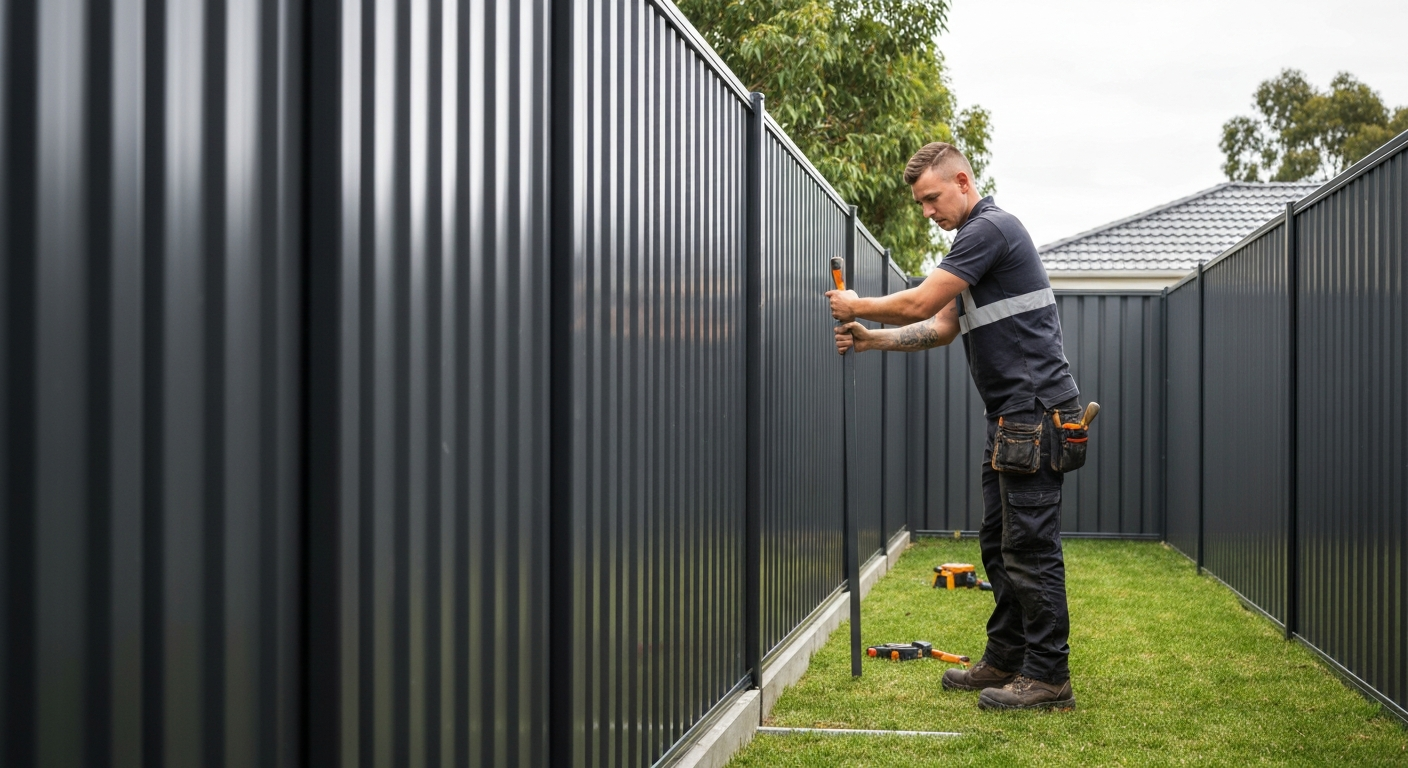
The ideal incorporated maintaining wall and fencing jobs look uncomplicated. The fence line is straight, gates swing easily, and water behaves as anticipated. You can stroll along the border after rainfall and see no suspicious moisture at the base, no weird discoloration behind fence trims, and no wobble that makes you examine the develop quality.
Achieving that in Melbourne normally comes down to a couple of self-displined choices: regard drain, select an article method that matches the wall's capabilities, make use of correctings that suit the materials and atmosphere, and established the fence after the wall system prepares rather than on a fixed schedule date.
If you're preparing a new build, or you're updating a wall surface and including fencing at the very same time, treat it like one collaborated job. If you're retrofitting a fencing to an existing wall surface, decrease much more and focus on the user interface details. That's where most of the long-term performance lives.
And when you're picking service providers, keep in mind that "great fence installation" is just half the tale. The other fifty percent is just how they take care of the wall-fence connection without endangering drain or requiring rigid activity. That's where Melbourne projects earn their credibility, and where a fencing line ends up being greater than a boundary, it becomes a long lasting component of the site.